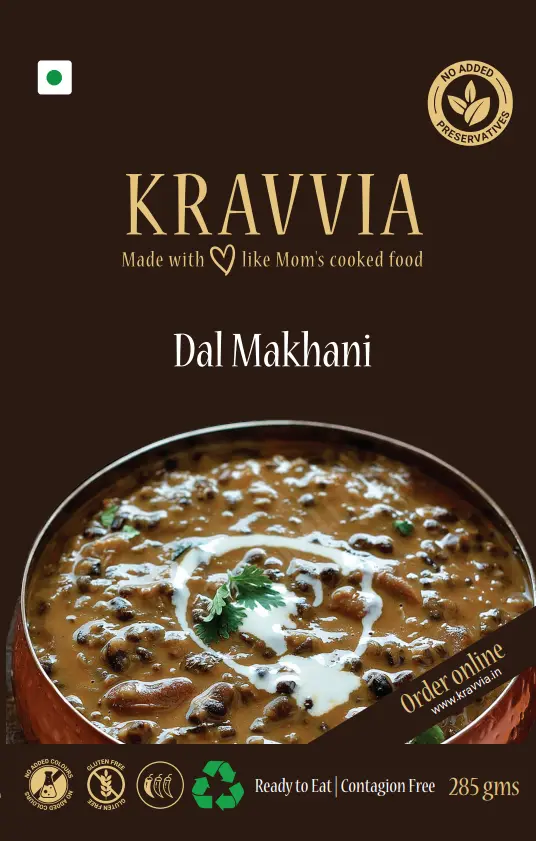
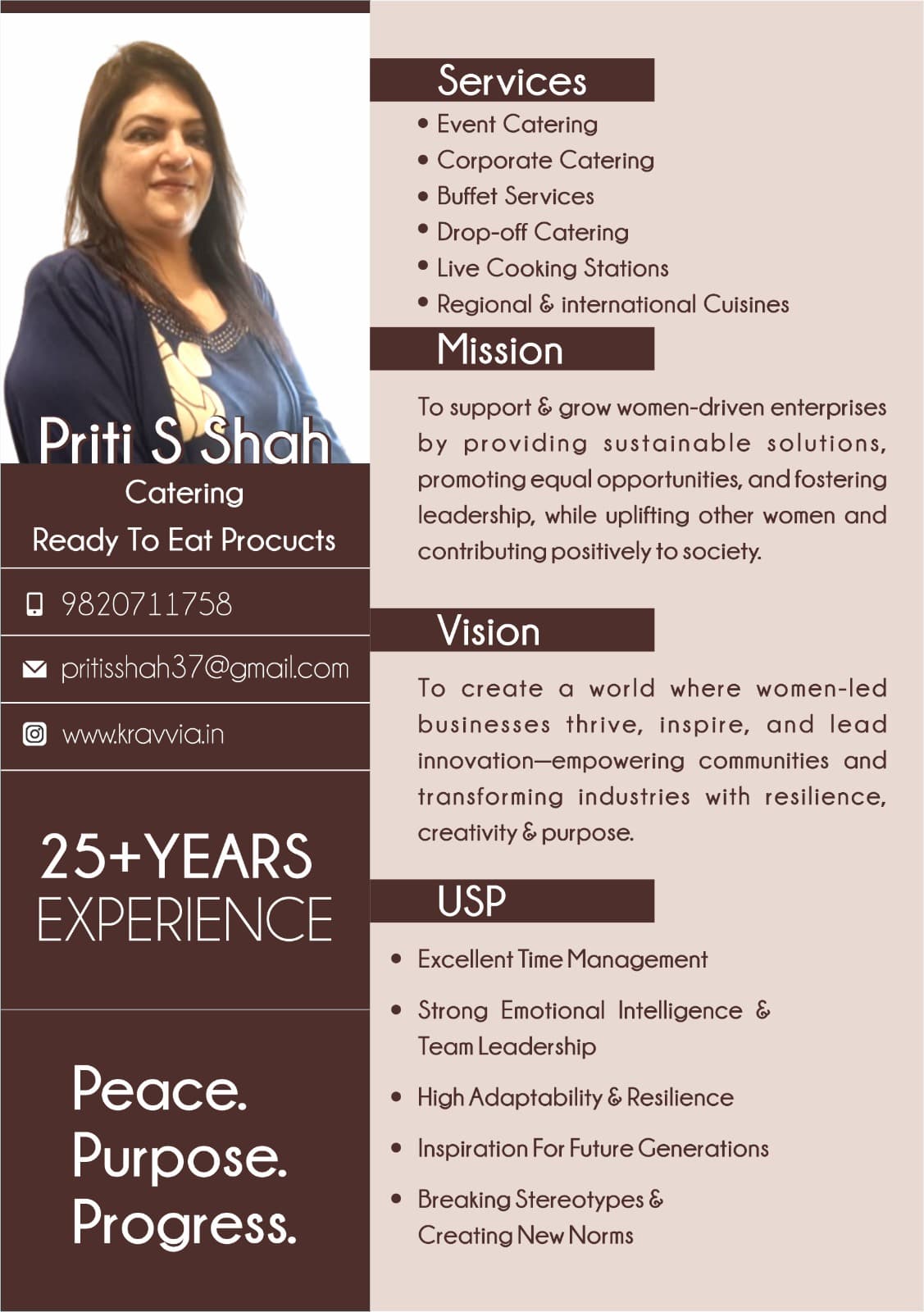
2018: How Eight Cuisines Arrived Under One Standard
By 2018, Kravvia ran Italian, Thai, and Mexican alongside five Indian traditions: eight cuisines, produced to Kravvia's specification in FSSAI-licensed partner kitchens. Here is why.
2015–2018: The Three Cuisines That Changed the Kravvia Brief
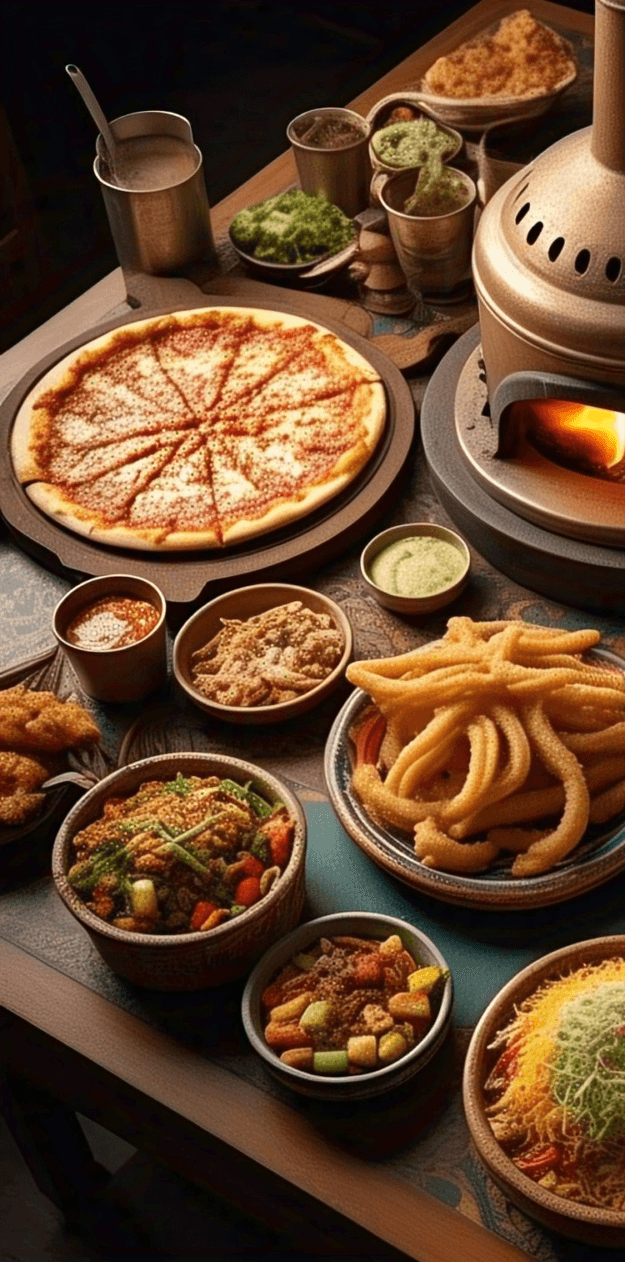
In 2015, a corporate client in BKC handed Priti S Shah a catering brief with a line she had not seen before: "One dinner. Three cuisines. All vegetarian. No overlap on the plate." The event was a 300-cover offsite for a financial-services firm. The guests would arrive from eleven countries. Priti's answer was to build the infrastructure, not just the menu, to handle that brief cleanly. By 2018, Italian, Thai, and Mexican had been formally absorbed into Kravvia's canon alongside the five Indian traditions Kravvia had run since 1999. Eight cuisines, produced to Kravvia's specification in FSSAI-licensed partner kitchens.
This is the story of that expansion: the sourcing decisions, the technique builds, the chefs who anchor each section, and the economic logic that made it necessary.
Why a Mumbai Caterer Needed Eight Cuisines
The Mumbai catering market shifted structurally between 2012 and 2018. Wedding hosts who had once asked for a single Punjabi or Gujarati spread began specifying mixed formats: a chaat counter for the sangeet, a live Italian station for the cocktail hour, a full Indian sit-down for the dinner. Corporate clients mirrored the pattern: board lunches in BKC increasingly required at least two cuisine tracks to cover dietary divergences within the same room.
For a caterer that had built its reputation on consistency at scale (daily 200-cover office lunches, 600-guest wedding receptions), the choice was binary: own the sourcing and technique down to the gram, or hand quality control to someone else. Priti's position, consistent across 25 years of operation, is that the quality of a dish is determined at the sourcing and prep stage, not at the plating stage. That specification was the one variable she controlled completely. That was not on the table.
So between 2015 and 2018, three new cuisine sections were built from ingredient sourcing through to live-counter format. Each required a dedicated chef lead. Each required a sourcing chain that did not exist in Mumbai's wholesale vegetarian market at the time. Each required technique decisions that could not be borrowed from the Indian menu that had been running since 1999.
Italian: The 48-Hour Cold-Ferment Pizza and the Scratch Sauce Rule
Italian was the first of the three to be formalised. The anchor decision was the pizza dough protocol: a 48-hour cold ferment in a controlled-temperature environment. The logic is structural, not stylistic. A long, cold fermentation develops gluten networks slowly, produces a crust with a tighter crumb and a more complex flavour without additives, and, critically for a catering operation, yields a dough that behaves predictably when stretched in front of guests at a live counter. Dough made same-day is variable. Dough on a 48-hour ferment at 4°C is not.
The pizza oven counter (Pizza Forno, a wood-fire unit that reaches 90-second bake cycles) became one of Kravvia's nine live-counter formats precisely because the ferment protocol made it reproducible at event scale. A single chef can manage 40 covers an hour off that counter without variance in the base.
The sauce rule is equally unambiguous: no jarred bases. The Italian section runs three sauce architectures: red (tomato, basil, low-heat reduction), white (béchamel, no shortcuts on the roux), and pesto (basil ground fresh per service batch). The same three sauces appear across pizza, pasta (penne, spaghetti, macaroni), and lasagna, the full Italian main-course section. Risotto is held separately, cooked to al dente and not pre-soaked. The starter line (bruschetta, calzone, mushroom-olive crostinis, cheesy rice tartlets, crispy pasta, cheese corn balls) all run from components built that morning.
The Italian Chef Anchor
The Italian section is anchored by a chef who trained on both Indian and European baking traditions, a combination that matters because the structural challenge of a catering-scale Italian operation is heat management, not recipe knowledge. Getting a lasagna to hold at 65°C for 45 minutes without drying, pulling risotto off-heat at the right moment for a buffet hold rather than a restaurant pass: these are catering-specific technique problems that require a chef who understands both the Italian originals and the event-kitchen constraints. That combination is what Priti sourced for this section.
Thai: In-House Paste and the Lemongrass Supply Chain
Thai was the most sourcing-intensive of the three additions. The core aromatics (lemongrass, galangal, kaffir lime) are not consistently available through Mumbai's standard wholesale vegetable markets. They require a dedicated sourcing chain, and the quality variance between batches is wide enough to affect the finished dish materially. Kaffir lime in particular has no substitute in a Thai green curry base; the leaves must be fresh or very recently frozen, not dried, to carry the volatile oils that define the flavour.
Kravvia's solution was to establish direct sourcing relationships for these three aromatics, separate from the standard Nasik vegetable supply that covers the Indian menu, and to bring paste production fully in-house. The Thai pastes (green, red, yellow) are made in batch quantities calibrated to the week's event schedule. Nothing is bought pre-made. The galangal is cleaned and sliced in-house; the lemongrass is bruised and incorporated at the right stage of the paste grind. The paste production cycle is one of the more labour-intensive prep tasks in Kravvia's week, which is why it runs on a fixed weekly schedule rather than to order.
The Thai menu currently runs sixteen plates: four starters (lettuce wraps, Thai paneer satay with peanut sauce, Thai rolls, fried potatoes with ginger sauce), four mains (tofu mushroom veg, green, red, and yellow curries), four rice formats (baby corn mushroom rice, coconut veg rice, green Thai rice, Thai layered rice), and four desserts. The Khow Suey counter (one of the nine live-counter formats, built around an eleven-pot build-your-bowl station) draws from the Thai sourcing chain and is among the highest-demand counters at cocktail-hour events across Bandra, Juhu, and Lower Parel.
The Thai Chef Anchor
The Thai section runs under a chef with specific experience in South-East Asian vegetarian cooking, a rarer profile than it sounds. Thai cuisine's vegetarian applications require fluency with coconut milk fat management (a green curry splits under high heat if the cook does not understand fat separation), with the timing of kaffir lime leaf addition, and with the structural difference between Thai basil and Italian basil. The chef who anchors this section at Kravvia came in with that specific knowledge and has since trained the wider team on the paste production cycle.
Mexican: Dried Chillies, Cumin, and the Shareable Format
Mexican was the third addition and the one that required the least new sourcing infrastructure: dried chillies (ancho, guajillo, pasilla) and cumin are already well-represented in Mumbai's wholesale spice market, but the most rethinking of format. Mexican at a 300-cover event is fundamentally a shareable-format cuisine: nachos with cheese sauce and salsa, quesadillas off the griddle, burritos rolled to order, enchiladas baked and held, tacos assembled at the counter. The format is designed for movement and speed, not for plated service.
Kravvia's Mexican section currently runs seven plates: nachos with cheese sauce and salsa, nachos overload, tacos, Mexican rice, burrito wrap, quesadilla, and enchiladas. The rice is a cumin-forward build, cooked separately from the Indian jeera rice even though the base spice is the same: the fat ratios and tomato addition are different. The cheese sauce for nachos is made in-house; no processed sauce product is used. The burrito wrap appears both in the Mexican section and as a one-pot meal format (burrito bowl) under the live-counter menu, the same filling, different service architecture.
Mexican also contributed one of Kravvia's strongest fusion signatures: the thepla quesadilla, where the Gujarati flatbread replaces the corn tortilla. It sits under the Fusion & Regional section of the menu rather than under Mexican proper, but its technique comes directly from the Mexican chef anchor's understanding of the quesadilla's structural requirements (fat content, griddle temperature, fold geometry).
The Mexican Chef Anchor
The Mexican section is anchored by a chef whose background spans Indian and Latin-influenced cooking. The critical skill here is spice layering without heat: Kravvia's events are 100% vegetarian, many are attended by guests with low chilli tolerance, and Mexican without the ability to dial chilli heat precisely is either bland or exclusionary. The dried chilli selection (which chilli, what toasting level, how much) determines the depth of flavour in the sauce base without necessarily increasing heat. That is a specific skill the anchor chef brought to the section.
What Eight Cuisines Actually Requires
Running eight cuisines under one vegetarian standard is not primarily a menu problem. It is a logistics and contamination-control problem. The Italian, Thai, and Mexican sections each have designated prep zones within Kravvia's partner kitchens. The Thai paste production does not run alongside the Italian sauce reduction; the Mexican cheese sauce does not share a pot with the Indian dal. Cross-contamination in a fully vegetarian kitchen is not a religious-dietary concern in the way it is for a non-vegetarian operation, but flavour cross-contamination is real and is managed through zoning, sequencing, and the use of section-specific equipment sets.
The sourcing calendar is the other coordination challenge. Lemongrass and galangal have shorter ambient shelf lives than dried Indian spices. Kaffir lime leaves degrade fast. The Thai section's sourcing cycle runs independently from the Indian section's Nasik vegetable delivery. Coordinating three independent sourcing chains (Indian, Thai-specific, Italian-aligned) while maintaining the no-preservatives standard across all 200-plus menu items is a supply-chain task as much as a culinary one.
What This Means for the Mumbai Event Host
For a host planning a 2026 event across Andheri, Powai, BKC, or Lower Parel, the eight-cuisine capability is a practical specification, not a marketing claim. It means a single catering vendor can cover a cocktail-hour Thai counter, a live Italian pizza station, a Mexican nacho bar, and a full Indian sit-down dinner, with all components produced to Kravvia's specification in FSSAI-licensed partner kitchens, under the same quality standard. There is no multi-vendor coordination, no quality variance between stations, no separate briefing documents for separate teams. One spec, one point of contact, one consistency standard across eight cuisine traditions built over the period 2015 to 2018 and running continuously since.
WhatsApp Priti at +91 98207 11758 to book a tasting.
She replies herself, often within the hour.
Peace · Purpose · Progress