2006, BKC: How Kravvia Ran 200 Corporate Covers a Day, and Kept the Home-Kitchen Finish
In 2006, Kravvia's first corporate client needed 200 office lunches daily in BKC. Here is what scaling a wedding kitchen into a five-day operation actually required.
2006, BKC: 200 Covers, Five Days a Week
In 2006, Bandra Kurla Complex was still hardening into the financial district it is now: towers rising on what had been marshland, corporations moving their back-offices northward from Nariman Point. Into that construction-site energy, Kravvia received its first standing corporate contract: daily lunch for a 200-seat office, five days a week, same time, no variation.
Seven years earlier, Priti S Shah had started the kitchen out of Santacruz, feeding family weddings. The wedding calendar was lumpy: peaks around November through February, long quiet stretches in between. A daily 200-cover corporate mandate was a different category of problem. It was not a larger wedding. It was a factory with a single customer who showed up every weekday expecting the same standard they got on Monday to be present again on Friday.
What followed (the reorganisation of the Santacruz kitchen, the writing of the first standardised recipe cards, the construction of a morning prep sequence timed to the minute) is the operational foundation that Kravvia still runs on today.
Why a Wedding Kitchen Cannot Simply Be Turned Up
A catering kitchen built around events runs on surge logic. You prep for a known headcount, on a known date, with a lead time of days or weeks. The quality bar is a single high-water mark: one exceptional day for one client who will refer you to ten others. The tolerance for variance is low on the day; the tolerance for inconsistency across weeks does not apply because there is only one event.
Corporate daily is the opposite. The client's office manager notices on Wednesday if the dal is thinner than it was on Monday. The office worker who had the paneer makhani on Tuesday and requests it again the following Tuesday is making a quality judgment in real time, comparing this week's plate to last week's memory. Inconsistency at frequency is visible in a way that inconsistency at a one-off event is not.
Priti's diagnosis was direct: the problem was not the cooking. The kitchen in Santacruz could produce 200 covers of a given menu. The problem was the recipe. Specifically, the lack of one, or rather, the lack of a written, calibrated, reproducible one. Wedding cooking runs on the head cook's experience and judgment. Quantity is scaled by feel; spice is adjusted by nose; the finish on a dum aloo gets right when it looks right to the person who has made it a hundred times. That system works when the same person is always in front of the pot. It fails the moment a second cook steps in, or the first cook has a bad morning, or you need to produce the same dish at 07:30 instead of the 10:00 that felt natural.
The First Recipe Cards: Calibration, Not Documentation
The response was not to write recipes in the sense of a cookbook. It was to calibrate. Priti and the core kitchen team ran what amounted to a measurement exercise: made each dish that was to go on the corporate rotation, recorded the gram-weights of every component at every stage, timed each phase of the cook, and described the visual and textural checkpoint that told you the phase was done. The output was a card, one dish per card, that a second cook who had not made this specific dish a hundred times could use to produce a result within tolerable variance of the original.
This is a harder problem in Indian cooking than it sounds. A dal makhani simmered six hours arrives at a different consistency depending on the mineral content of the water, the humidity of the day, and the precise age of the urad dal. The recipe card had to account for this: not just add X grams of water but the dal should coat the spoon at this point; if it does not, simmer 20 minutes more. Checkpoints, not just quantities.
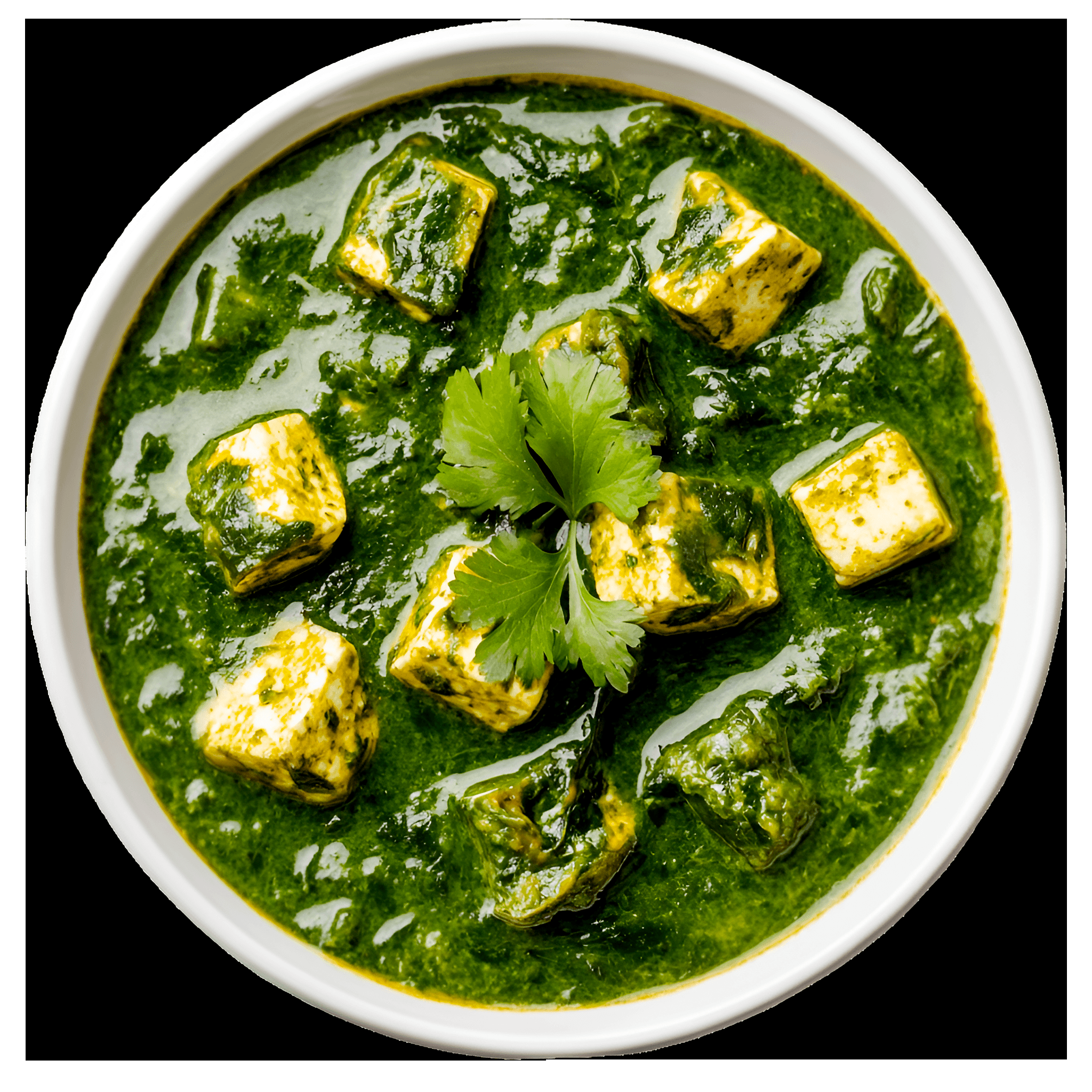
The dishes that went into the first corporate rotation were the northern Indian staples the Santacruz kitchen had been producing since 1999: Veg Kadai, Paneer Makhani, Dal Fry, Dum Aloo Punjabi, Veg Biryani. Not experimental. Reliable. Dishes where the team already had the technique and the only work was capturing it precisely enough to reproduce it without the original cook's intuition in the room.
Kitchen Hierarchy: Who Owns What at 06:00
The second structural change was the installation of a explicit kitchen hierarchy, timed to the corporate lunch schedule. For a 12:30 delivery to BKC, accounting for transport from Santacruz and the logistics of keeping 200 portions of hot food at temperature, the kitchen had to be running at full capacity by 06:30. That meant the prep sequence started at 05:30, and the person responsible for each station had to know, without being told that morning, exactly what they were responsible for.
Priti established station ownership: one cook who anchored the wet mains (the gravies, the dals); one who handled the dry preparations and starters; one who ran rice and biryani. The morning lead, the person who unlocked the kitchen and set the prep in motion, held the day's recipe cards and was responsible for the cross-check: confirming that the dal had gone on at the right time, that the paneer for makhani was cubed correctly, that the biryani vessel was sealed and timed.
What this did, beyond the obvious operational clarity, was create accountability at a granular level. If the dal was thin on Wednesday, there was a specific person to ask, a specific checkpoint that had been missed, a specific moment in the cook where the correction could have been made. The wedding-kitchen model of collective, experienced judgment was replaced by a model where every outcome had an owner.
Sourcing at Frequency: The Paneer and Vegetable Problem
Daily 200-cover production exposed a sourcing vulnerability the wedding kitchen had never had to confront: a wedding sourced once per event. Ingredients were bought for a specific headcount, for a specific date, and any excess was managed after the fact. For a daily corporate operation, the sourcing relationship had to run at the same frequency as the production: every morning, farm-fresh vegetables and day-fresh paneer, at the quantities the recipe cards specified.
The Khar paneer supplier relationship that Kravvia maintains to this day dates from this period. Day-old paneer produces a different texture in a makhani: it releases more moisture into the gravy, it does not absorb the masala at the same rate, the cubes break under high heat instead of holding shape. The corporate client's office manager does not describe the problem in those terms, but they notice that the paneer dish is not as good this week as it was last week. Priti's response was to lock the sourcing cycle to the production cycle: fresh paneer in before prep began, every day, no backstock.
The same logic applied to the vegetable supply. Nasik-sourced farm vegetables (the tomatoes that anchored every gravy, the spinach in the palak preparations) came in on a schedule aligned to the weekly prep calendar. Sourcing discipline at this level is expensive in management overhead. It is also, over time, the thing that makes consistency possible. You cannot standardise a recipe if the ingredient varies.
Consistency at Frequency: What the BKC Contract Built
By the time the BKC contract had run for twelve months, the Santacruz kitchen had produced something more valuable than a satisfied corporate client. It had produced a repeatable operating system: written recipe cards, a timed morning prep sequence, explicit station ownership, a sourcing cycle locked to production frequency. This infrastructure was not visible on the plate. The office worker getting their Dum Aloo Punjabi at 12:30 on a Friday did not know about the 05:30 start or the gram-weight calibration on the masala. They knew the dish tasted the same as it had the Friday before.
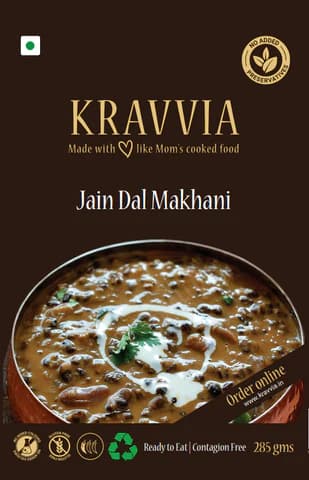
That operational layer is what the 2012 Jain kitchen expansion built on. When Priti installed a fully isolated Jain prep room (no shared surfaces, no shared utensils, complete separation from the main kitchen), the recipe-card system extended to the Jain menu. The same calibration discipline that had been applied to Veg Makhani in 2006 was applied to Jain Dal Makhani in 2012: every gram recorded, every checkpoint described, the cook's intuition made reproducible in writing.
The retort line launched in 2022 (13 SKUs, 12-month shelf life, zero preservatives) is the furthest expression of the same logic. A retort pouch is recipe standardisation taken to its industrial limit: the dish is produced to a specification precise enough that it survives a sterilisation cycle and emerges, twelve months later, within acceptable variance of the original. The Jain Dal Makhani in the retort range is the 2006 BKC recipe discipline applied to a pouch format. It does not taste like a retort product because it was not formulated like one; it was formulated like a catering dish that happens to be shelf-stable.
What This Means for a Corporate Client in BKC Today
The corporate catering market in BKC, Lower Parel, Powai, and Andheri has grown substantially since 2006. The office density is higher, the employee-experience expectations are higher, the dietary-specification complexity is higher (no onion, no garlic, gluten-free, Jain, sugar-free) and the consequence of a bad lunch service landing on social media is more immediate. Corporate F&B managers running a 200-plus daily operation cannot absorb the risk of inconsistency at frequency.
Kravvia's corporate catering offering starts from the operational infrastructure that the first BKC contract forced into existence in 2006: written, calibrated recipes, explicit station ownership, a sourcing cycle that runs at the same frequency as the production, and a kitchen hierarchy that does not depend on any single individual's judgment. That is not a marketing claim. It is the only way a kitchen can produce the same standard on Friday that it produced on Monday, week after week, across a 200-cover daily operation.
Corporate catering rates start at ₹650 per guest. The menu spans eight cuisines (Indian, Chinese, Thai, Italian, Mexican, Gujarati, Maharashtrian, Jain) with full dietary-spec coverage on each. Enquiries for BKC, Lower Parel, Powai, and Andheri are open for Q3 2026 onward.
WhatsApp Priti at +91 98207 11758 to book a tasting.
She replies herself, often within the hour.
Peace · Purpose · Progress